St AUSTELL GREEN HYDROGEN
OUR PIONEERING GREEN HYDROGEN PROJECT TO UNLOCK DEVELOPMENT OPPORTUNITIES AND DECARBONISE FOSSIL- FUEL INDUSTRIES
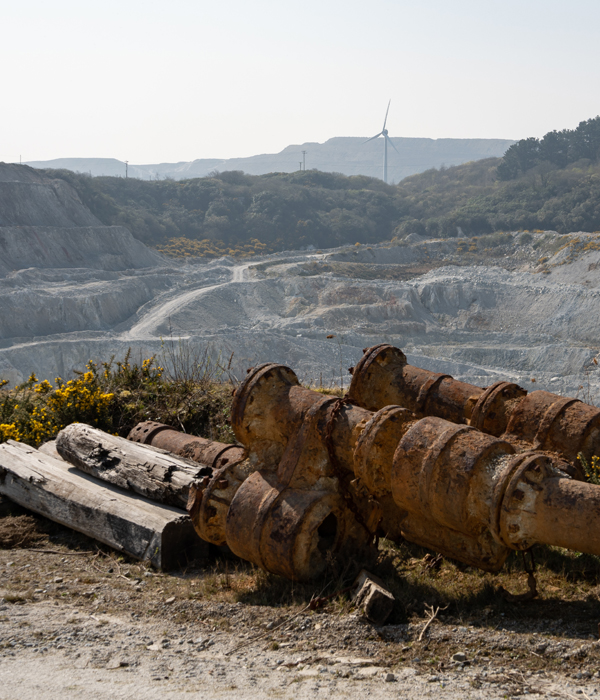
As one of our key projects, this proposed green hydrogen facility would be developed on a brownfield site within the Cornish Clay Country, to the north of St Austell and close to the local industrial sites where the hydrogen would initially be used.
Phase One of the project would include a 20 MW electrolyser, producing up to 2,000 tonnes of green hydrogen each year when operating in response to available renewable electricity. Hydrogen would be stored at low pressure on site and supplied to nearby industrial users through a local pipework network, helping to reduce emissions from existing activities rather than introducing new ones.

20 MW
ELECTROLYSER TO BE INSTALLED

2,000
TONNES OF HYDROGEN PRODUCED ANNUALLY

15,000
TONNES OF CO2 EMISSIONS REDUCED ANUALLY

THE PROCESS

RENEWABLE ELECTRICITY POWERS THE SYSTEM

WATER IS PURIFIED
THE WATER IS SPLIT INTO HYDROGEN AND OXYGEN
THE HYDROGEN IS SUPPLIED TO LOCAL INDUSTRY VIA LOW PRESSURE PIPELINES
OXYGEN IS SAFELY RELEASED INTO THE AIR
A PIONEERING PROJECT THAT WILL SUPPORT THE UK IN SECURING A TECHNICAL LEAD IN GREEN HYDROGEN TECHNOLOGY
The site has been carefully planned to allow for future expansion up to 60 MW, should demand for green hydrogen grow in Cornwall, including from sectors such as heavy goods transport.
Once operational, Phase One is expected to reduce carbon dioxide emissions in Cornwall by around 15,000 tonnes per year – roughly equivalent to the emissions from 7,000 homes.
A planning application will be submitted to Cornwall Council in Q2 2026. Before submitting the application, Four Zeros Energy will share its proposals with local residents, businesses and stakeholders, providing opportunities to learn more about the project and to give feedback. Subject to planning approval, construction is expected to begin in 2027 with the facility planned to become operational in 2029, supporting existing jobs in the local minerals industry and creating a small number of permanent roles at the hydrogen production site.
Further information and updates will be shared as the project develops.

PHASE ONE
Phase One is expected to reduce CO2 emissions in Cornwall by about 15,000 tonnes annually, which is about the same amount of CO2 as is produced by about 7,000 homes.